
Stop Making Sense
Sometimes the urge to make meaning can be counter-productive.

One day last September, I made a lunch date with a new friend, Francine, in a village about a half hour away from me, where she had just moved full time. I met her through Michel and Simon back when she was looking for a place to buy. Now she’s here, with every penny she has sunk into a years-long renovation project she can’t entirely manage, too much of which she’s doing by herself.
It was sunny out that day, and I didn’t have a ton of work, so I left early. I wanted to take a walk in the forest adjacent to her village. It’s a different kind of forest than what’s around my house: less dense, and so, in a way, less stimulating. To me, that signals better fitness for contemplation. We need space to do that.
My agenda was to go off-piste, find a tree, and have a moment. Now, planning those moments is always a little silly. When you go out looking for enlightenment it rarely comes, and if it does, it usually doesn’t come in the form you imagined. On principle, it’s a good idea to invite synchronicity into your life and carve out at least a tiny space for the unknown. You just can’t find yourself disappointed when you don’t see a burning bush or whatever. Unknown means unknown. Sometimes that is also empty, or boring, or eventless. It doesn’t make it worthless.
I left with an hour to spare and figured that when it came time to pick a spot, something or someone would send me a sign. Fairly deep into the forest, it came, literally. “Pierre des druïdes,” said the road marker, next to another one pointing to a parking area. Normandy was druid country back in the day, and I vaguely remember having seen this attraction in some flimsy tourist guide or other when I first got to Le Perche. I parked, changed into the rubber boots I had tossed into the trunk of my car, and headed into the woods.
Because the stone is a national landmark, it showed up on Google Maps, but it was off piste, which meant it could have been almost anywhere. I bushwacked a bit, tried to follow the pin on the map, got sick of looking at a device, and just redirected my gaze to take in what was around me. That part of the forest is populated by beech and sessile oak trees, whose lacy leaves let in tons of sun. The air was crisp and smelled peaty, even though the last rain was several days before. I crunched along through a rattly carpet of dead leaves until an elderly couple with walking sticks came into view. I asked them if they knew where the stone was, and they pointed back behind them.
“It’s impressive,” they said.
“All of this is impressive,” I said, gesturing to the forest.
We smiled and went our separate ways.
The stone was unmistakable once I arrived, thanks to a druid sculpture carved out of a tree trunk just a few feet away. It had a budget Lord of the Rings aesthetic, and if you got past the long beard and the staff, you’d see that Temu Gandalf was also carrying a scythe.
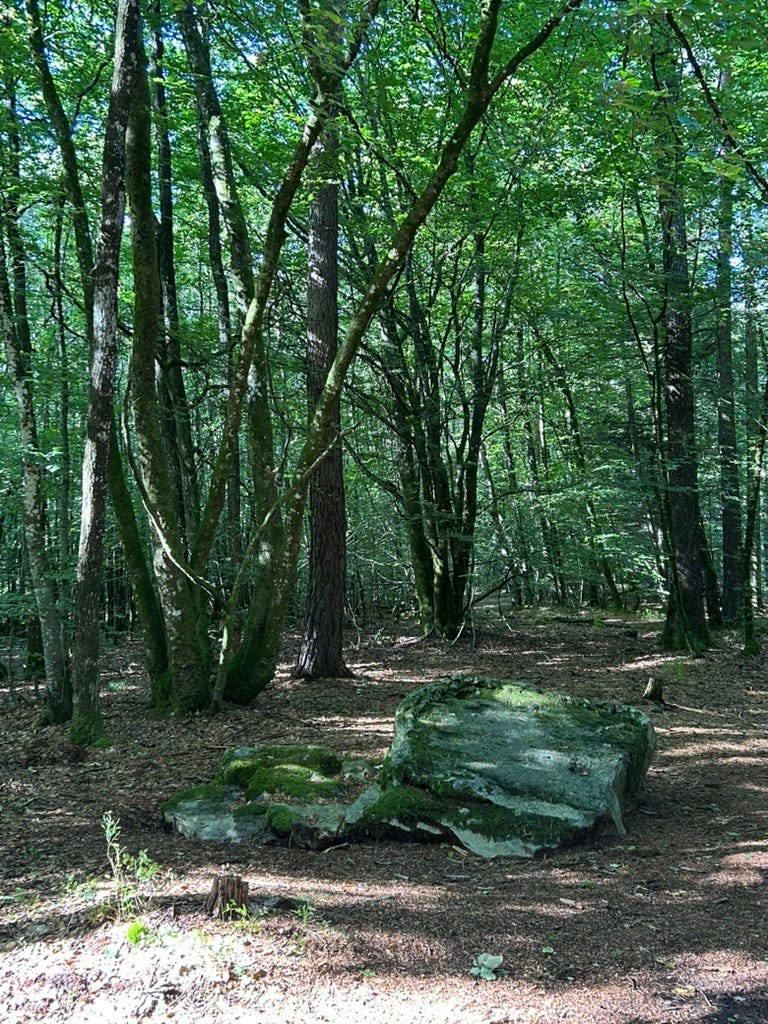
The stone itself is about the dimensions of a ping pong table, half covered in moss. I edged up to it, put my hand on it and took a breath. Nothing called out to me, no psychic images of past lives appeared. I didn’t expect them to. I just wanted to touch something that my fellow humans had touched back before the current order was established. It felt like a link in a chain that was bigger than I could grasp.
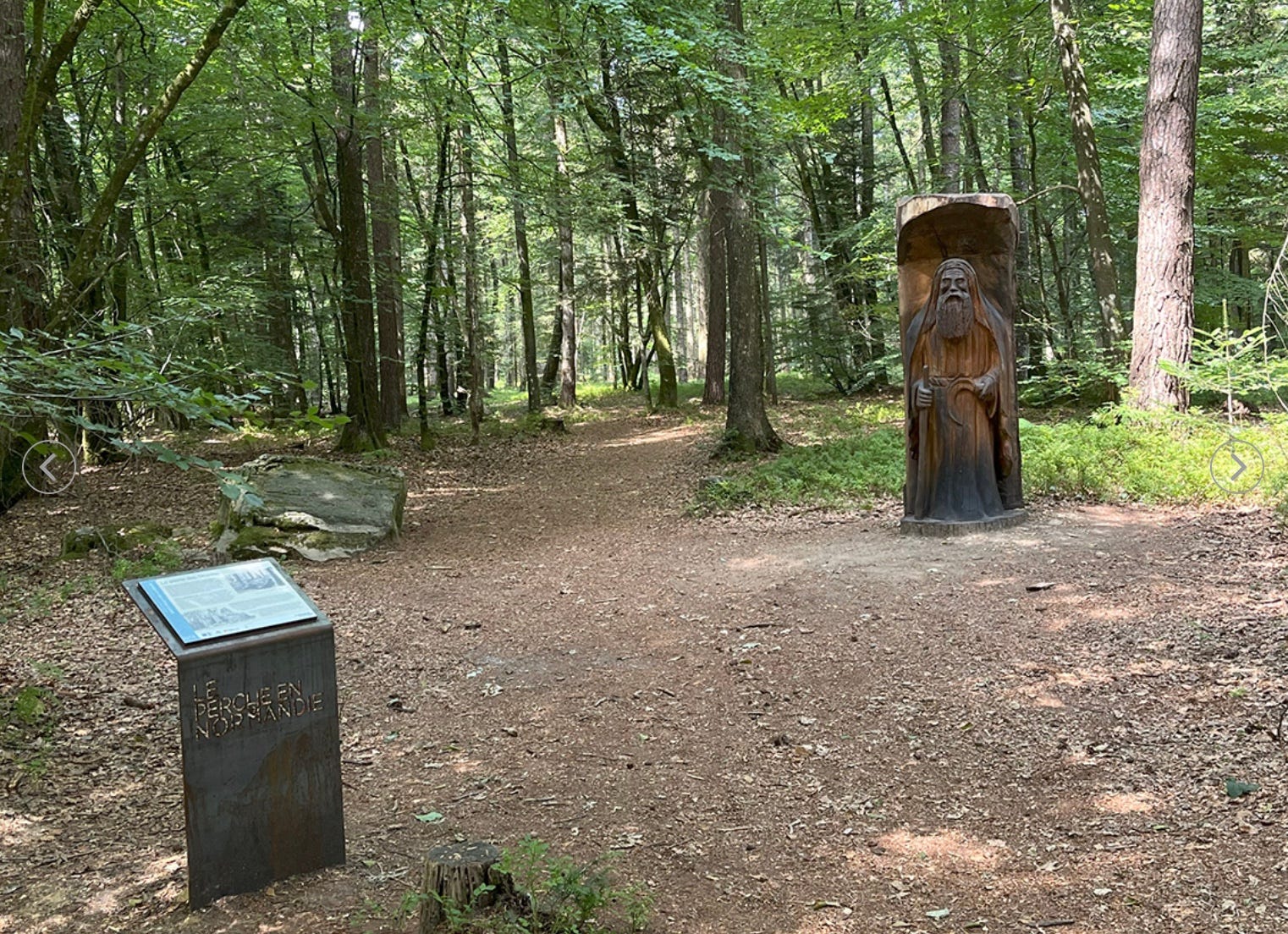
Tourism guides citing “local tradition” say that the stone was used by the druids for human sacrifice, hence the name and the scythe. It’s quite a sexy and dramatic image, but almost surely apocryphal. The stone is officially classified as a neolithic menhir. It dates back centuries before the time of the druids, and it could have been used for just about anything. There is no consensus on whether Celtic religious rites included human sacrifice anyway. Or if they did, that they used the same curved knives they used to cut grain. Julius Caesar’s and other Roman accounts that spoke of the practice were not neutral. They had a lot to gain by making the natives look savage and chaotic. “Druidic” got attached to a lot of megalithic monuments like this rock in the 18th and 19th centuries for funsies. Much of it stuck.
All of this is to say that we are so desperate to attach meaning to what we don’t understand that we will dive headfirst into alluring fakes rather than just take a nice walk in the fresh air.
We rush to the end of stories because we need closure, not necessarily understanding. Things that have caught our attention can’t be allowed to unfurl on their own time anymore. They have to come to a satisfying conclusion, or be replaced by a bigger, more tempting story to keep the dopamine system satisfied. When that next story doesn’t make sense either, we skip to another tentacle of the polycrisis, carrying the frustration of the last non-closure with us. The epistemological stress is soon compounded by bitterness, and as it speeds up and gets heavier at the same time, it starts to break our brains. That’s how mine feels right now, at least.
The worst people in the world—the ones who designed the platforms we’re on, and the ones who refuse to regulate them—wanted this to happen because it would make it easier for them to sell us things. And now here we are.
I really struggled with whether to write anything today at all. There are too many words in circulation in this moment, too many takes, too much verbiage for the sake of grabbing attention. Not enough of it is clear or innocent. Not enough of it helps anything. I don’t need to have an opinion on the latest catastrophe, even though I will surely rush to try to craft one, because that’s what we all do.
I just won’t clutter your inbox with it presently. So I’ll tell you more about Francine, another middle-aged woman like me who came to Le Perche with a half-baked life reset plan, some other time, even though I’m worried about her now. She’s in Beirut, where she used to live. She had planned to go back for a visit before the current madness kicked off, and now Air France is canceling flights, so her return date is uncertain, along with just about everything else in the world.
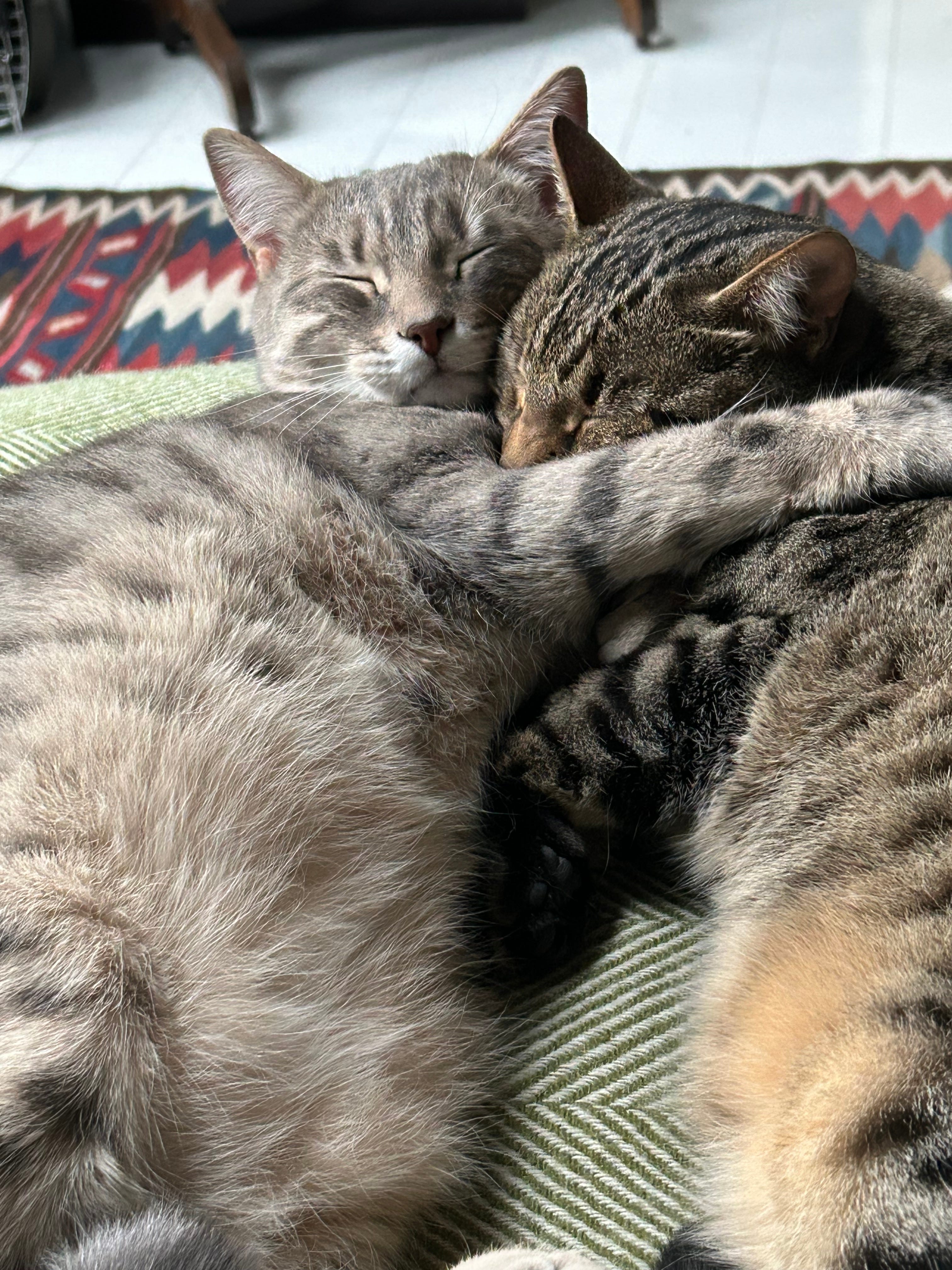
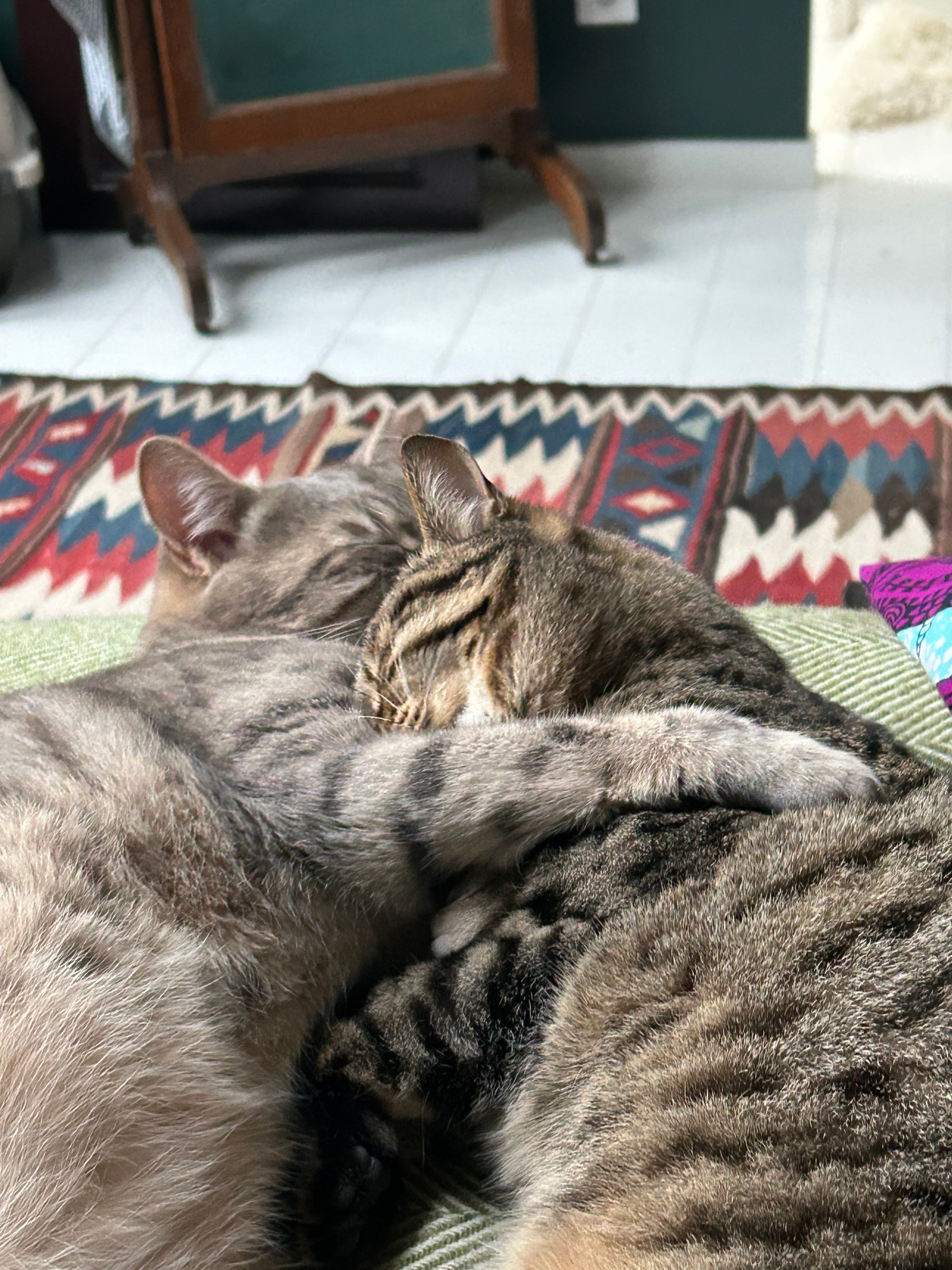
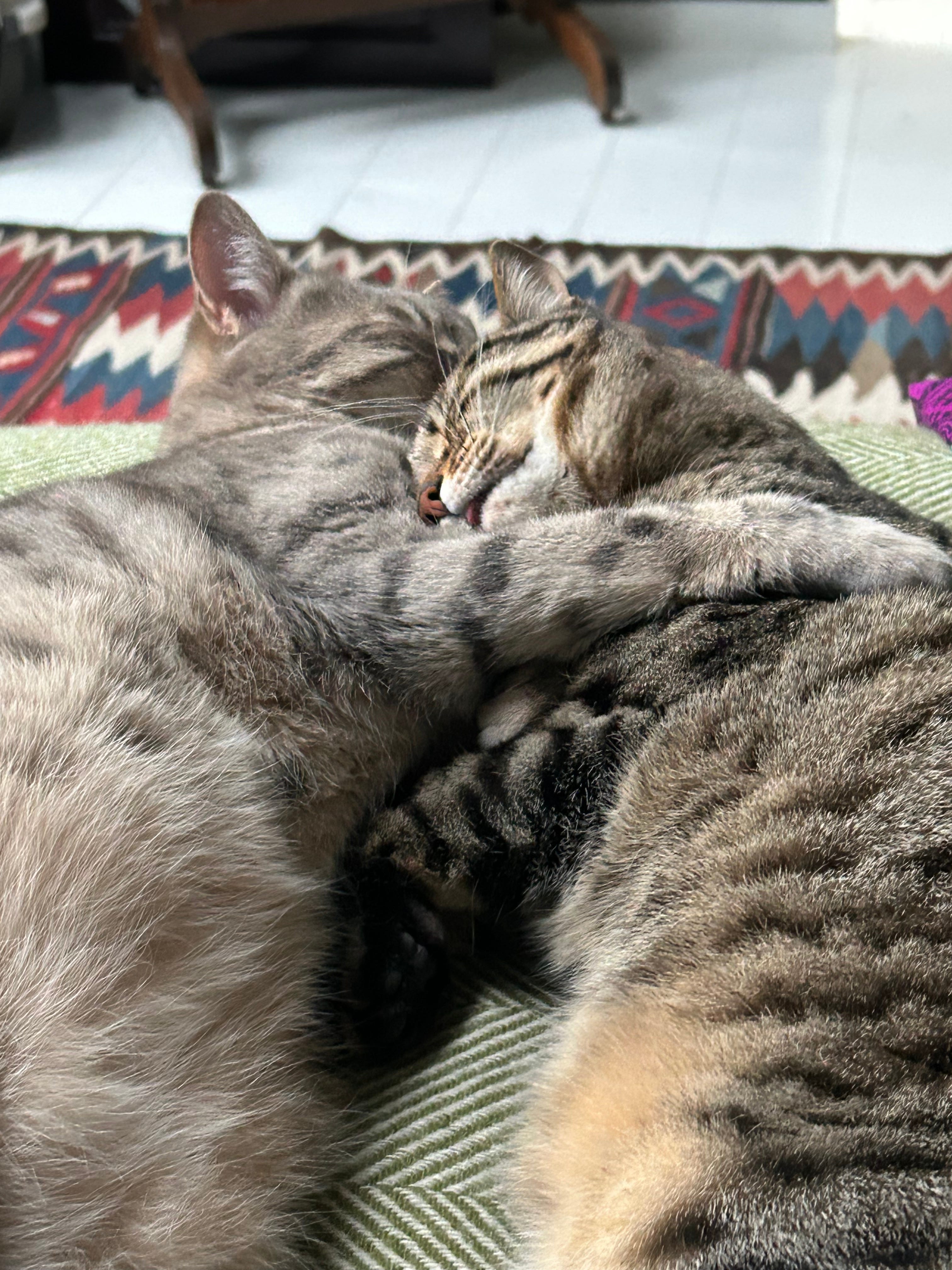
I’ll close today with a sampling of the most effective mental health aids I have access to, my patron saints of unbotheredness. I never intended to become a philosophical cat blogger, but I keep coming back to these gals because they work.
Thank you for this. I agreed, too many words about things out of our control. Your words allow for the thriving of our own pursuits and I appreciate them so so so much.
Sunday morning in Cheviot... Ms.Marshall lends calm to our world... Thank you